Behavioral screening: No significant baseline differences between groups in accuracy or reaction time, confirming neither group started with a reading-ability advantage.
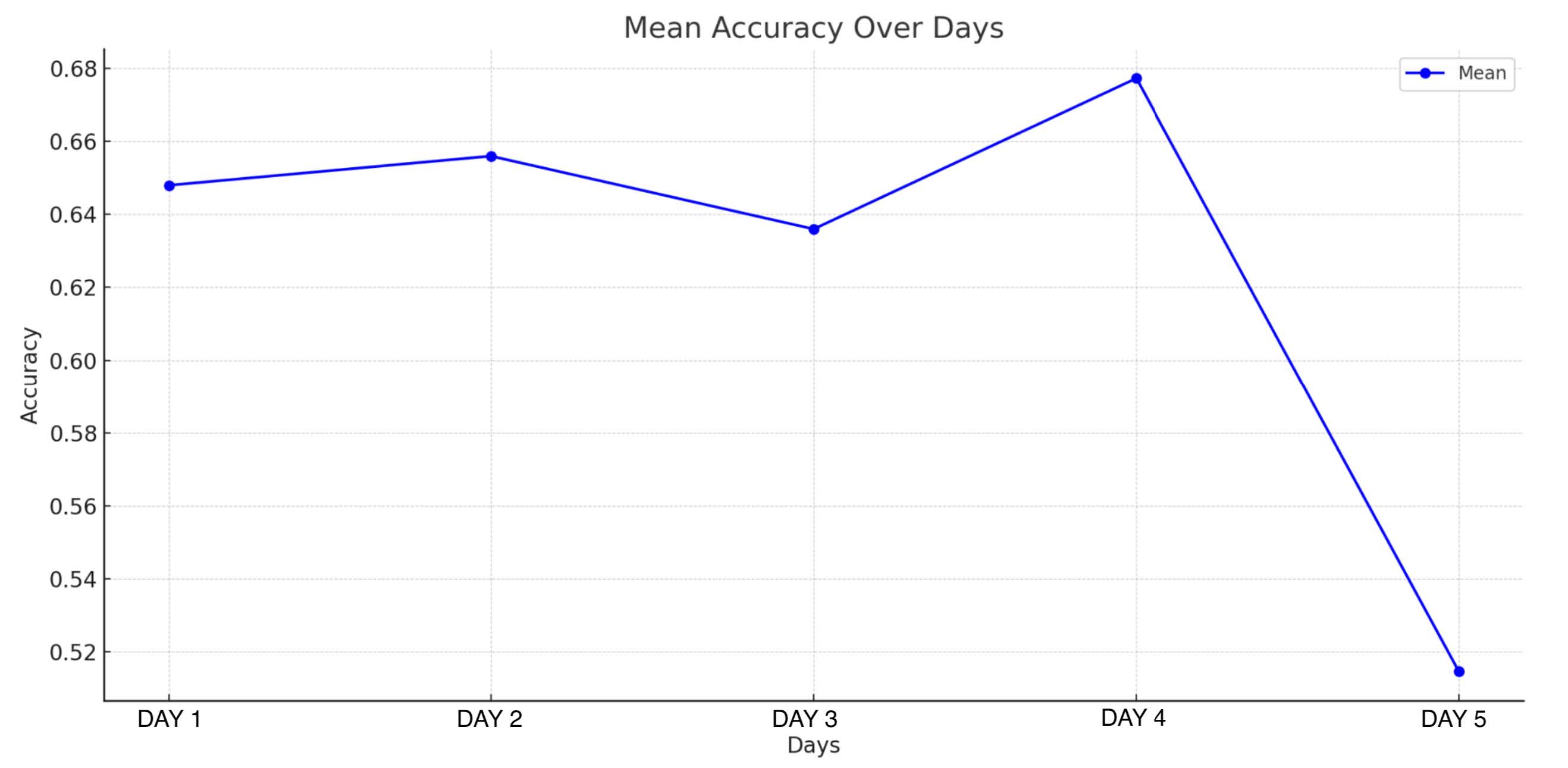
Training performance: All 15 remaining experimental subjects successfully learned to use the BCI. Individual learning curves varied: 7 participants showed a clear performance improvement across training days, 3 stayed stable, 5 declined, highlighting real individual variability in BCI responsiveness, a well-documented challenge in the field.
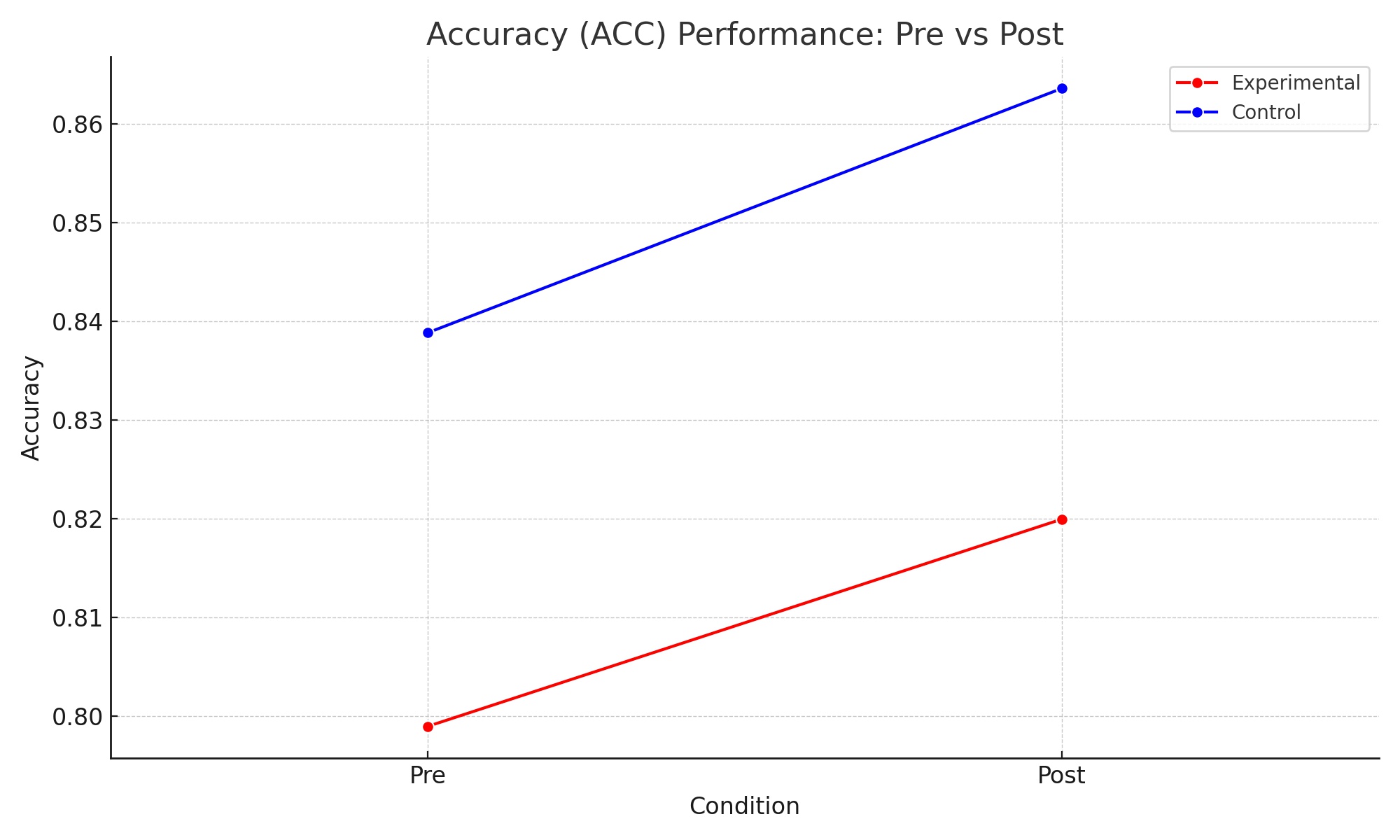
Accuracy (pre vs. post reading test): The experimental group improved from 0.799 to 0.820; the control group from 0.839 to 0.864. Neither change was statistically significant, and there was no significant difference between groups (p = 0.370). Training did not measurably change accuracy.
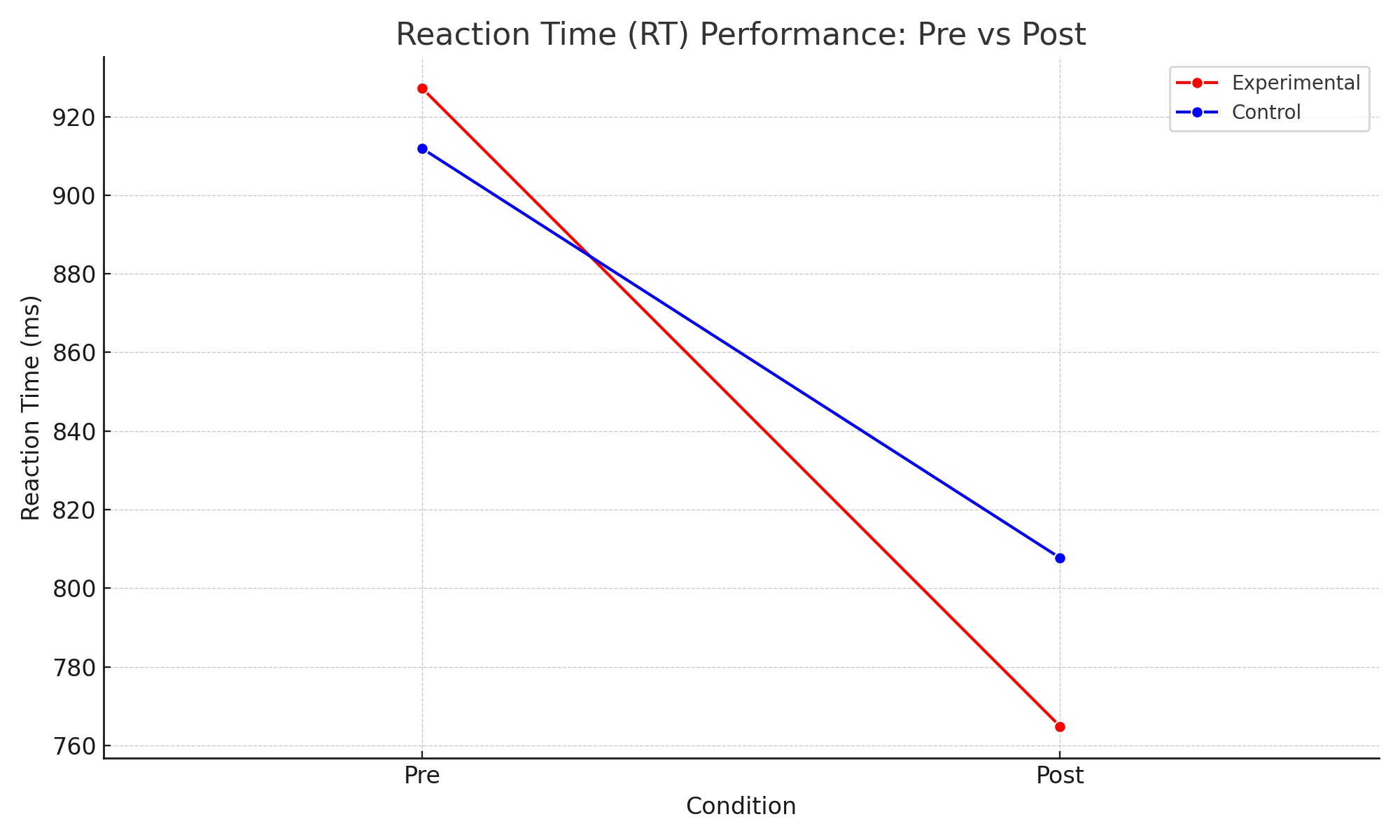
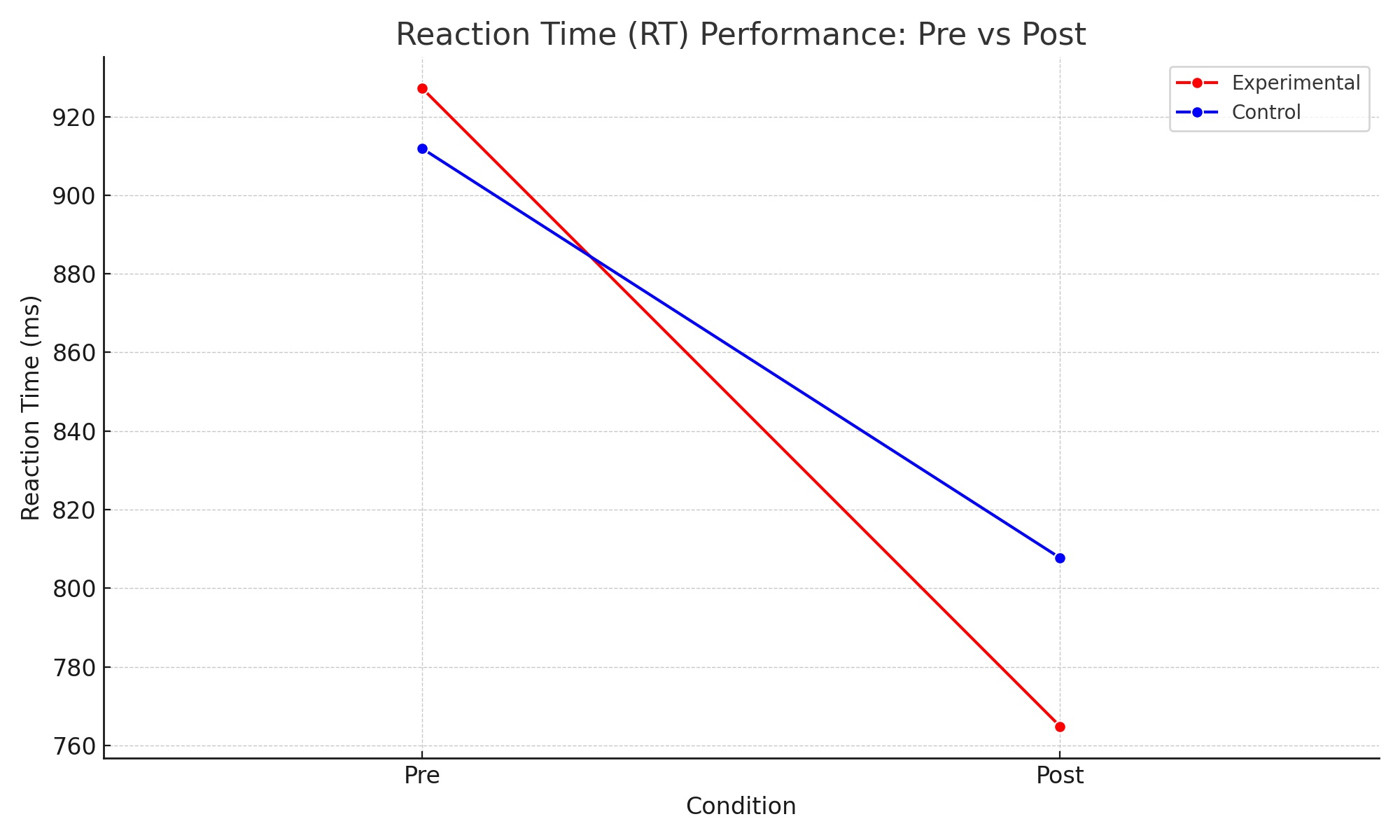
Reaction time (pre vs. post reading test): The experimental group's average reaction time dropped from 927ms to 765ms; the control group's dropped more modestly, from 912ms to 808ms. This was a statistically significant interaction (p = 0.028): the experimental group's improvement was significantly larger than the control group's practice effect (t = 6.26, p < 0.001 for the experimental group vs. t = 2.19, p = 0.044 for the control group).
Correlation: Among participants whose performance improved during training, there was a strong positive correlation (r = 0.61) between training performance and reaction-time gains afterward, suggesting the people who adapted best to the BCI also benefited most from it, reinforcing that individual variability isn't just noise, it's a variable worth designing around.